The Crew Chief Club
The Crew Chief Club was founded in 1998 by Jimmy Makar, Larry McReynolds, Todd Parrott, Robin Pemberton and entrepreneur Danielle Randall-Bauer with the goal of providing fans with an insider’s look behind shop walls and into the NASCAR garage area.
This was their website.
Content is mostly from the site's archived pages providing a glimpse of what the Crew Chief Club offered its followers.
Enjoy the nostalgic trip back.
ABOUT
In 2000, the original group who formed the Crew Chief Club in 1998, Jimmy Makar, Larry McReynolds, Todd Parrott, Robin Pemberton and entrepreneur Danielle Randall-Bauer, expanded its membership by adding Tommy Baldwin, Jimmy Elledge, Ryan Pemberton and Greg Zipadelli.
Today the Crew Chief Club is a thriving company that prides itself on working with several of the top Crew Chiefs in NASCAR racing. With its headquarters just a half mile from Lowe’s Motor Speedway it’s close to the action at the track as well as many of the race shops.
Together with its marketing partners, Crew Chiefs will be accessible to fans at races and special events, in the media and on the web which prominently spotlights their dedication to their drivers, teams and sport.
These founding members of the Crew Chief Club aim to provide fans with a new way to interact with their favorite race teams.
From signing autographs and speaking with fans at their respective manufacturer's souvenir trailers, to chatting with fans via the Internet, Crew Chief Club members are out to create recognition and fan support for their fellow crew members.
Together with its marketing partners, Crew Chief Club members will be accessible to fans at races and special events, in the media and on the world wide web at www.crewchiefclub.com, prominently displaying their dedication to their drivers, their teams and their sport.

Origin of the Crew Chief Club
FORT WORTH, Texas, (Apr. 3, 1998) Bobby Labonte scores his third win in four starts at Atlanta Motor Speedway. Dale Earnhardt finally wins the Daytona 500 in his 20th attempt. Dale Jarrett continues his winning ways from last season by finishing first at Darlington. Rusty Wallace leads the NASCAR Winston Cup points standings riding a string of top-five finishes.
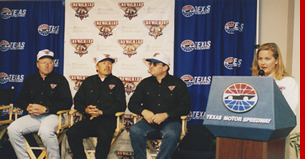
Indeed, these drivers are talented athletes, but behind their records and accomplishments lies one pivotal and crucial player - the Crew Chief.
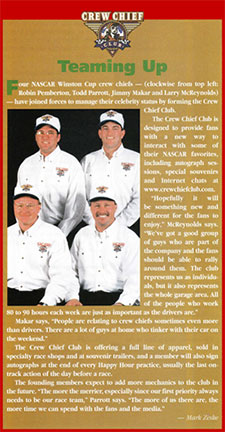 Today's unveiling of the Crew Chief Club is designed to shine the spotlight on the hardest working men in NASCAR, namely Jimmy Makar, Larry McReynolds, Todd Parrott and Robin Pemberton.
These founding members of the Crew Chief Club aim to provide fans with a new way to interact with their favorite race teams. From signing autographs and speaking with fans at their respective manufacturer's souvenir trailers, to chatting with fans via the Internet, Crew Chief Club members are out to create recognition and fan support for their fellow crew members.
"For years fans have been able to recognize drivers through the media, and they can relate quite well to them now," said Makar, Crew Chief for six-time Winston Cup race winner Bobby Labonte. "The Crew Chief Club is a way for fans to get to know us on a more personal level - similar to that of the drivers. They'll find out what we're all about and the role that we play in getting our teams to win races and compete for championships."
Together, Makar, McReynolds, Parrott and Pemberton have led their drivers to 61 wins, 312 top-five finishes, 501 top-10 finishes and 59 poles prior to this Sunday's Texas 500 at the 1.5-mile Texas Motor Speedway. Their stewardship and undying ambition for their respective race teams to succeed have propelled their operations into the upper echelon of the NASCAR Winston Cup Series. This has been accomplished through constant performance on the race track, and many long hours inside the garage and back at the shop.
"It takes a lot of hard work to be a crew chief," said Pemberton, Crew Chief for current NASCAR Winston Cup points leader Rusty Wallace. "But a crew chief isn't a crew chief without his crew. There wouldn't be anyone to chief without his guys.
"Each team has about 50 employees. Your main objective is to get all those guys together to work the long hours and convince them that the rewards will come with victories, poles and points. It's a lot of hours, but we quit counting hours a long time ago."
Those long hours have made NASCAR the most popular form of motorsports in the world, and in conjunction with NASCAR's 50th Anniversary, the
|
Larry McReynoldsFounding Member Larry McReynolds is a two-time Daytona 500 Champion Crew Chief with renowned drivers Davey Allison and Dale Earnhardt. McReynolds along with legendary driver Darrell Waltrip and veteran race announcer Mike Joy make up the Emmy Award-winning NASCAR on FOX broadcast team.
|
|
||
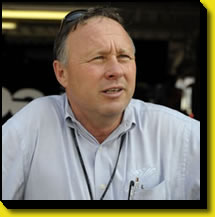 |
Jimmy MakarFounding Member Jimmy Makar is a former Crew Chief with Joe Gibbs Racing and driver Bobby Labonte. Makar has a prestigious Daytona 500 win, a Championship in 2000 and 18 NASCAR Cup Series victories on his resume. His highly successful 11-year relationship with the Gibbs organization has earmarked Makar as one of the brightest Crew Chiefs in the NASCAR garage. |
||
|
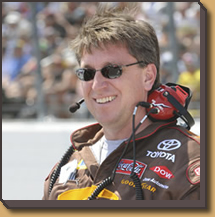
Ryan PembertonMember Ryan Pemberton is the Crew Chief for Red Bull Racing's #83 Toyota driven by Brian Vickers. The 2009 season marks his 13th year as a Cup Crew Chief. In 2007 his driver Mark Martin narrowly missed a Daytona 500 victory as Kevin Harvick beat him to the line by a .20 second margin, the closest finish in history at the iconic Superspeedway.
|
 |
||
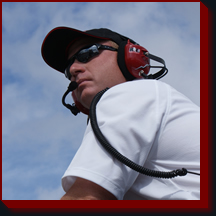 |
Tommy BaldwinMember Tommy Baldwin is the owner and Crew Chief for Tommy Baldwin Racing. Tommy Baldwin Racing fields the #36 Toyota driven by Scott Riggs. Baldwin, a three-time Cup winner, has been a Crew Chief in the series since 1997. The highlight of his career came in 2002 when he and driver Ward Burton won the prestigious Daytona 500.
|
||
|
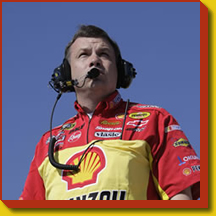
Todd BerrierClient Todd Berrier is the Crew Chief for Richard Childress Racing’s #07 Jack Daniels Chevrolet driven by Casey Mears. In 2007 Berrier led his #29 team to victory in the Daytona 500. |
 |
||
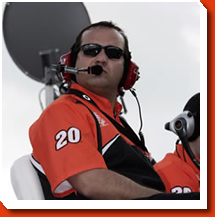 |
Greg ZipadelliMember Greg Zipadelli is a two-time Cup Champion and Crew Chief for Joe Gibbs Racing’s #20 Home Depot Toyota. “Zippy” achieved great success with driver Tony, “Smoke”, Stewart. The duo shared the longest Crew Chief-Driver relationship in NASCAR beginning in 1999 and ending at the end of 2008. Fast-Forward to 2009, Zipadelli has new challenges ahead with young driver and Rookie sensation Joey Logano behind the wheel.
|
||
|
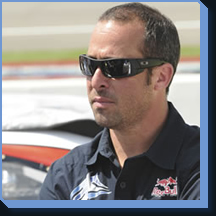
Jimmy ElledgeMember Jimmy Elledge is the Crew Chief for Red bull Racing’s #82 Toyota driven by Scott Speed. In 2001, Elledge went to Victory Lane in Talladega as Crew Chief for Andy Petree Racing with the late Bobby Hamilton behind the wheel. |
 |
||
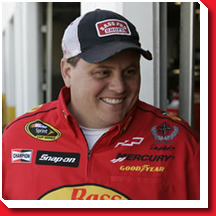 |
Kevin ManionClient Kevin “Bono” Manion, is the Crew Chief for Earnhardt Ganassi Racing's #1 Bass Pro Shops Chevrolet driven by Martin Truex Jr. Bono helped guide Truex Jr. and the #1 team to a berth in the Chase for the Cup in 2007 as well as its first victory at Dover’s Monster Mile in June. |
||
Richard "Slugger" LabbeClient |
|
||

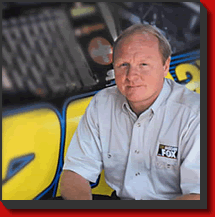






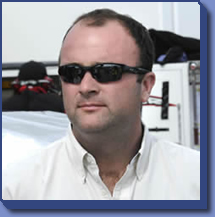
Congratulations to Kevin Manion, Jamie McMurray and the No. 1 team on winning the 2010 Daytona 500.
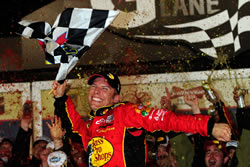
(Photo Credits: Rusty Jarrett/Getty Images)
Jamie McMurray Wins The 52nd Running Of The Daytona 500
Earnhardt Ganassi PR
DAYTONA BEACH, Fla. (February 14, 2010) - Jamie McMurray held off Dale Earnhardt Jr. during a second attempt at a green-white-checkered flag finish to win the 52nd running of the Daytona 500 for Earnhardt Ganassi Racing with Felix Sabates in the No. 1 Bass Pro Shops/Tracker Boats Chevrolet. The win came in McMurray’s first race back with owners Chip Ganassi and Felix Sabates, making Ganassi the only team owner besides Roger Penske to win the Daytona 500, the Indy 500 and the Rolex 24 At Daytona.
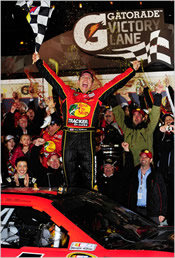
(Photo Credits: Rusty Jarrett/Getty Images)
Sunday’s race was long, lasting over six hours, with two red flag delays lasting two and a half hours to repair a pothole in the asphalt between turns one and two and two attempts at a green-white-checkered flag finish. McMurray spun his tires on the restart on Lap 207 but got a push down the front stretch and through the first turn from third-place finisher Greg Biffle. Securing the top spot from Kevin Harvick on the backstretch, McMurray led the final two laps.
The win delivered Chevrolet its 21st victory in the Daytona 500, a record among manufacturers.
+++
Life goes on: It was so thrilling to watch Jamie McMurray win the Daytona 500. That day is etched in my memory, and I even have a photo album filled with pictures capturing the excitement. I recently showed a friend the album, and it brought back so many wonderful memories of the energy and camaraderie at the race.
This particular Daytona was also memorable because car owner Chip Ganassi accomplished a feat that has never been done before in motorsports – winning both the Daytona 500 NASCAR Sprint Cup Series race and the Indianapolis 500 IZOD Indy Car Series race in the same year. As my racing car enthusiast husband would say, "Pretty impressive!" And in case you don't know, Iin addition to these Indianapolis 500 and Daytona 500 victories, Ganassi’s team also became the first to win three consecutive overall titles in the Rolex 24 At Daytona GRAND-AM Rolex Sports Car Series event between 2006-08. Yes I know my race car trivia.
+++
TOP 12 CREW CHIEFS TO APPEAR ON SPECIAL “NASCAR PERFORMANCE LIVE” RADIO BROADCAST
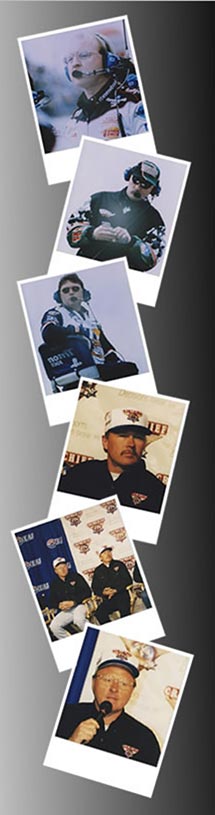 Top NASCAR Crew Chiefs to Break Down The 2009 Chase for the NASCAR Sprint Cup Series Championship at NASCAR Technical Institute
CHARLOTTE, N.C. (Sept. 15, 2009) – On Wed., Sept. 16, the top twelve NASCAR crew chiefs in the hunt for the 2009 NASCAR Sprint Cup Series Championship will take part in the annual Top 12 “NASCAR Performance Live”radio show broadcast originating in front of a live audience at the NASCAR Technical Institute in Mooresville, N.C., 7 to 8 p.m.
Hosted by Larry McReynolds and Steve Post, the one-hour radio broadcast will air nationally on Motor Racing Network (MRN) affiliates across the country beginning at 7 p.m. ET and on Sirius NASCAR Radio at 10 p.m. ET.
The program will be an all-access pit pass to a behind-the-scenes look at the technology and teamwork it takes to compete for championships. Audience members, which will include students from NASCAR Tech, will have the opportunity to interact with the men behind The Chase drivers and get the latest insight into each team’s strategy heading into the final ten weeks of the season.
‘“NASCAR Performance Live’ is about the great professionals who prepare the cars for competition and the incredible work and strategy that goes into winning races and the ultimate: a NASCAR Sprint Cup Series Championship,” said Odis Lloyd, managing director, NASCAR Automotive Group. “This year’s broadcast will celebrate the crew chiefs involved in this highly competitive season and those that put the machines under our great drivers, and allow listeners to get to know and appreciate the people behind the scenes who keep their teams performing at the highest levels at the racetrack.”
NASCAR Sprint Cup Series crew chiefs – Alan Gustafson, Darian Grubb, Chad Knaus, Mike Ford, Kenny Francis, Steve Letarte, Pat Tryson, Ryan Pemberton, Bob Osborne, Tony Gibson, Brian Pattie, and Greg Erwin – with teams currently in the title hunt are scheduled to appear at NASCAR Tech to represent their teams on the Sept. 16 show.
The event is open to fans and admission is free.
A media property of NASCAR Automotive Group, “NASCAR Performance Live” can be heard weekly on Sirius NASCAR Radio and approximately 130 Motor Racing Network (MRN) affiliates nationwide. The program’s talk show format features a rotating line-up of NASCAR crew chiefs giving fans insight into the technical aspects and team side of racing. SPEED reporter Ray Dunlap joins each program with a relevant “Car Care Know-How” Tip of the Week featuring NASCAR automotive partners. “NASCAR Performance Live” sponsors include O’Reilly Auto Parts, Mahle, Raybestos and WIX.
About NASCAR Automotive Group
The NASCAR Automotive Group, based in the Charlotte, NC NASCAR Plaza office, supports sponsorship and licensing partnerships of companies in the automotive category and the contingency special awards program. Under the NASCAR Performance brand, automotive partners build brand awareness and sales of their products and services via an integrated marketing program. The program includes: The NASCAR Technical Institute – a branch of Universal Technical Institute Inc. (UTI) that trains automotive technicians for the workforce; the NASCAR Performance Network – a nationwide network of quality automotive repair shops and parts stores; NASCAR Angels - a reality based TV show that repairs the cars of deserving people; a weekly TV show on SPEED called “NASCAR Performance”; a national radio show called “NASCAR Performance LIVE” on MRN and SIRIUS NASCAR Radio; and print and online media programs with the BABCOX family of automotive magazines, NASCAR Scene andNASCAR.COM.

O'Relly Auto Parts VIP Event
October 15 -16, 2008
Charlotte, NC
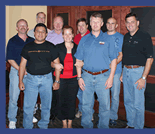 The Crew Chief Club, LLC., working with Standard Motor Products, hosted a VIP experience for O’Reilly Auto Parts Regional Managers October 15-16th 2008 in Charlotte, NC. The top O’Reilly Regional Managers with the highest percentage of sales increase for BWD Select Wire Sets won the trip to NASCAR’s Hub city. The lucky winners were treated to dinner with Greg Zipadelli, Crew Chief for Joe Gibbs Racing’s #20 Home Depot Toyota, as well as legendary retired Crew Chief and current Fox Sports Analyst, Larry McReynolds.
During their visit, the guests were given personal, guided tours through the amazing race shops at both Hendrick Motorsports and Joe Gibbs Racing. The guests each had some time behind the wheel on their own at the Jeff Gordon Racing School where they took part in the Winners Circle Driving Program. They each ran three 28-lap segments and between each segment the drivers were coached individually by their personal Crew Chief, Zipadelli, on what they could do to improve lap speeds.

National Pit Crew Championship 2005
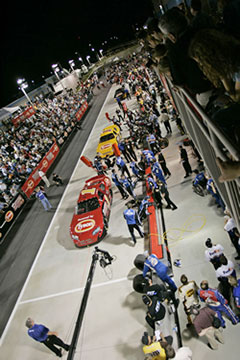 Tyson Partners with the Crew Chief Club To Sponsor the 2005 National Pit Crew Championship
CONCORD, NC (October 16, 2004) – Tyson Foods, Inc. will proudly "power" the pit crews behind stock car drivers with the creation of the 2005 "National Pit Crew Championship Powered by Tyson™." Additionally, Tyson will sponsor the 2005 "National Motorsports Team of the Year," culminating in a year-end awards ceremony that recognizes pit crews and teams and awards up to a half million dollars.
30 Cup and 10 Busch teams have been invited to participate in the 2005 "National Pit Crew Championship Powered by Tyson™." Pit crews will compete against each other for the fastest pit stop at the event. The competition will take place at the Pit Instruction and Training (PIT) facility in Mooresville, North Carolina on May 9, 2005. The event will air on the SPEED Channel.
The 2005 "National Motorsports Team of the Year Powered by Tyson™" is a season long contest with voting and rankings to determine the 2005 National Motorsports Team. The winning team will be chosen by Cup Crew Chiefs and other motorsports personalities, with additional votes coming from fans and Tyson team members.
Tyson recently unveiled a $75 million fully integrated, multi-channel marketing communications campaign with the tagline, "Powered by Tyson™". From extensive consumer research, a truth emerged: protein=energy=power. Tyson's new strategy recognizes the company's position as the premiere provider of protein by pointing to the role meat protein plays in the diet.
"The "Powered by Tyson™" theme resonates well with the Crew Chief Club sponsorship as Tyson is powering the people that power NASCAR," said Bob Corscadden, senior vice president and chief marketing officer at Tyson Foods, Inc. "We are thrilled to be a part of one of the most popular and exciting sports in the world ."
"We're very excited to have Tyson sponsor our events which were created to recognize all the pit crews and teams who work so hard every week," said Larry McReynolds, former crew chief and now FOX Sports television analyst. "These guys need all the power they can get to accomplish their goals week in and out, and Tyson helps to provide them with that source of protein power ."
2004 NEWS
Fennig finally - deservedly - wins a title
By: Larry McReynolds
December 2, 2004
If you don't realize that NASCAR racing is a team sport, you didn't watch the 97 team very closely this season, especially the last three or four weeks of the season. Busch and his team overcame adversity, and I'm very happy for crew chief Jimmy Fennig because I was a crew chief for 18 years and never accomplished winning a championship.
Even though I love Jimmie Johnson's crew chief Chad Knaus, Jeff Gordon's crew chief, Robbie Loomis, Mark Martin's crew chief Pat Tryson and Dale Earnhardt Jr.'s car and crew chiefs the Eurys, part of me was pulling for Fennig because I know how long he's been racing, and I know how hard he's worked for it. Fennig is one of those unsung heroes of our sport.
Next Friday, the Nextel Cup Series will gather in New York to honor Kurt Busch. I do believe Busch will make a good champion. He's not Jeff Gordon. He's not Tony Stewart. He's not Bobby Labonte or Dale Jarrett or Matt Kenseth, but none of those guys is like the other. Each is different in his own way with his own personality. I believe Busch will represent our sport well as the 2004 Nextel Cup champion.
We have talked all season about change with Nextel replacing Winston as the series title sponsor. Next week in New York, the top 25 drivers will receive over $24 million in point fund money. To put that in perspective, when R.J. Reynolds and Winston came into our sport 34 years ago as the series sponsor in 1971, the total point fund was $100,000. Champion Richard Petty's share of the point fund money was $40,000. If you don't think our sport has grown, just take a peek at those numbers.
Friday's banquet will close the books on 2004, but I visited Robert Yates Racing on Monday and saw the teams back at work, digging and getting ready for January testing at Daytona, Las Vegas and Fontana. The rule book says you cannot test at a NASCAR-sanctioned track until Jan. 1, but in early December, you had better believe that teams, especially Dodge teams with the new Charger coming on board, will test their 2005 cars at Kentucky Speedway, Greenville-Pickens Speedway or Lakeland, Fla.
Recent Releases
- 12/02/04 Biffle let Busch lead early, but showed no mercy late
- 12/02/04 Three champs, three different ways of winning
- 12/02/04 NASCAR's Chase sets racing standard
- 12/02/04 Working as one, Hendrick Motorsports was hard to beat
- 12/02/04 Truex took title by racing to win each week
Tyson Foods, Inc. Powers Stock Car Racing's Top Pit Crews
Tyson Partners with the Crew Chief Club To Sponsor the 2005 National Pit Crew Championship
CONCORD, NC (October 16, 2004)
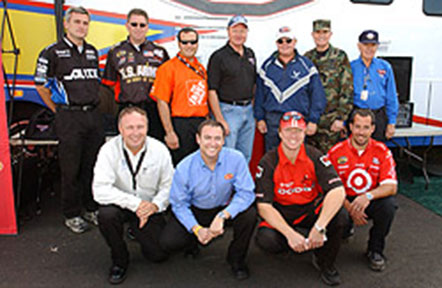
Tyson Foods, Inc. will proudly power” the pit crews behind stock car drivers with the creation of the 2005 National Pit Crew Championship Powered by Tyson.” Additionally, Tyson will sponsor the 2005 National Motorsports Team of the Year,” culminating in a year-end awards ceremony that recognizes pit crews and teams and awards up to a half million dollars.
30 Cup and 10 Busch teams have been invited to participate in the 2005 National Pit Crew Championship Powered by Tyson.” Pit crews will compete against each other for the fastest pit stop at the event. The competition will take place at the Pit Instruction and Training (PIT) facility in Mooresville, North Carolina on May 9, 2005. The event will air on the SPEED Channel.
More Background On CrewChiefClub.com
CrewChiefClub.com is a motorsports website with roots in one of NASCAR’s most commercially successful and culturally influential periods. The site represents the online home of the Crew Chief Club, an organization created to give racing fans greater access to the strategists, mechanics, managers, and technical leaders responsible for preparing competitive NASCAR race cars.
Founded in 1998, the Crew Chief Club brought together several of the most recognizable crew chiefs in the NASCAR Winston Cup Series. Its original members were Jimmy Makar, Larry McReynolds, Todd Parrott, and Robin Pemberton. Marketing entrepreneur Danielle Randall-Bauer helped create and develop the organization and was a founding owner.
The concept was unusual for its time. NASCAR marketing had traditionally focused primarily on drivers, car owners, sponsors, and manufacturers. The Crew Chief Club attempted to broaden that focus by presenting crew chiefs as personalities in their own right. Through its website, public appearances, merchandise, sponsorship programs, competitions, radio broadcasts, and corporate events, the organization introduced fans to the people making critical decisions from the pit box and inside the race shop.
Although CrewChiefClub.com is now best understood as a historical and nostalgic resource, its archived content documents an important shift in how NASCAR teams and technical personnel were promoted to the public.
The Founding of the Crew Chief Club
The Crew Chief Club was officially introduced in 1998, the year NASCAR celebrated its 50th anniversary. The timing was significant. NASCAR was expanding nationally, television audiences were growing, sponsorship programs were becoming more sophisticated, and fans were becoming increasingly interested in what happened behind the scenes.
The organization’s founding crew chiefs were closely associated with four of the sport’s leading drivers and teams:
- Jimmy Makar worked with Bobby Labonte at Joe Gibbs Racing.
- Larry McReynolds worked with Dale Earnhardt at Richard Childress Racing.
- Todd Parrott worked with Dale Jarrett at Robert Yates Racing.
- Robin Pemberton worked with Rusty Wallace at Penske Racing South.
By the time the Crew Chief Club was unveiled, the four men had collectively accumulated dozens of victories, hundreds of top-five and top-10 finishes, and numerous pole positions. More importantly, they represented four prominent organizations competing for race wins and championships.
A public announcement associated with the April 1998 race weekend at Texas Motor Speedway explained the central idea behind the organization: NASCAR drivers were widely recognized, but the crew chiefs responsible for organizing teams and preparing their cars rarely received comparable attention.
The Crew Chief Club wanted to change that imbalance.
Jimmy Makar described the organization as a way for fans to learn what crew chiefs were like personally and understand the role they played in helping teams win races and championships. Robin Pemberton emphasized that a crew chief’s success depended on coordinating a much larger group of employees, including mechanics, engineers, fabricators, engine specialists, and pit crew members.
These comments reveal that the Crew Chief Club was never intended to celebrate crew chiefs in isolation. Its larger purpose was to increase recognition for entire race teams.
Danielle Randall-Bauer and the Organization’s Business Development
Danielle Randall-Bauer was instrumental in transforming the Crew Chief Club from an interesting idea into a structured marketing organization. Later professional profiles describe her as the club’s creator and a part-owner alongside several leading NASCAR crew chiefs.
Her background was in marketing, promotions, public relations, and business development. That experience helped the organization connect racing personalities with sponsors and fans. Rather than operating only as a traditional fan club, the Crew Chief Club functioned as an endorsement and experiential-marketing business.
The organization offered companies a way to enter NASCAR through crew chiefs instead of relying exclusively on the far more expensive model of sponsoring a driver or race car. A business could associate itself with respected technical figures, arrange appearances, create customer experiences, sponsor competitions, or use crew chiefs in promotional campaigns.
Randall-Bauer later characterized the Crew Chief Club as one of racing’s more innovative endorsement-marketing programs of its era. That description is supported by the organization’s activities. It combined personality representation, sponsorship development, fan engagement, hospitality, merchandise, media appearances, and branded racing events under one identity.
Records and business references identify the organization as Crew Chief Club LLC and place its operations in Concord, North Carolina, at the center of the Charlotte-area NASCAR industry.
Location Near Charlotte Motor Speedway
The Crew Chief Club promoted its headquarters as being approximately half a mile from Lowe’s Motor Speedway, the name used for Charlotte Motor Speedway between 1999 and 2009.
That location placed the business in one of the most important motorsports corridors in the United States. The speedway is in Concord, northeast of Charlotte, and is surrounded by race shops, motorsports suppliers, hotels, restaurants, retail developments, and technical businesses serving NASCAR teams.
The club’s proximity to the track offered several advantages. Members and staff could participate in speedway events, organize appearances during major race weekends, entertain sponsors, meet fans, and maintain close relationships with nearby teams.
Concord is also near Mooresville, often called “Race City USA,” where many NASCAR teams, suppliers, training facilities, and motorsports businesses have operated. The Crew Chief Club’s activities frequently extended across this larger Charlotte–Concord–Mooresville racing region.
Its location therefore was not incidental. It placed the organization near the teams, tracks, personnel, media outlets, and sponsors it intended to represent.
Expansion of the Membership
The Crew Chief Club expanded beyond its four original crew chiefs. By 2000, its membership included Tommy Baldwin, Jimmy Elledge, Ryan Pemberton, and Greg Zipadelli.
These additions strengthened the organization by representing more teams, manufacturers, drivers, and career backgrounds. Later versions of the website also featured clients or affiliated crew chiefs such as Todd Berrier, Kevin “Bono” Manion, and Richard “Slugger” Labbe.
The distinction between members and clients suggests that the Crew Chief Club developed into more than a fixed society of founders. It became a marketing and representation platform for multiple NASCAR professionals.
The careers represented on the site were substantial. Members and clients were connected to Daytona 500 victories, Cup Series championships, major race wins, and some of NASCAR’s most successful driver-crew chief partnerships.
Greg Zipadelli, for example, became especially well known for his long relationship with Tony Stewart at Joe Gibbs Racing. Jimmy Makar helped guide Bobby Labonte’s championship-winning team and later moved into senior management at Joe Gibbs Racing. Todd Parrott won a championship with Dale Jarrett. Larry McReynolds won the Daytona 500 with both Davey Allison and Dale Earnhardt before becoming a prominent television analyst.
The club’s roster gave it credibility with fans and commercial partners. These were not symbolic representatives; they were active decision-makers associated with leading NASCAR organizations.
What CrewChiefClub.com Offered Visitors
During its active years, CrewChiefClub.com served several overlapping purposes. It promoted members, distributed news, published technical commentary, announced public appearances, supported sponsor campaigns, and sold merchandise.
Archived versions and surviving pages indicate that visitors could find:
- Profiles and career summaries for crew chiefs
- Race previews and track-specific statistics
- Technical observations from members
- News releases and announcements
- Race results connected to club members
- Sponsor promotions and corporate events
- Autograph schedules and fan appearances
- Merchandise and branded apparel
- Information about pit crew competitions
- Links to broadcasts, interviews, and media coverage
The site regularly connected its members’ records to upcoming races. Before an event at Daytona, Talladega, Bristol, Darlington, or another major track, Crew Chief Club material might summarize how its members had performed there previously.
These previews often included wins, pole positions, starting positions, finishing positions, average speeds, margins of victory, and comments about technical or competitive issues.
That structure made the website both promotional and informative. Fans could follow familiar crew chiefs while learning more about race preparation, teamwork, strategy, and track performance.
Fan Interaction and Merchandise
A primary goal of the Crew Chief Club was to make crew chiefs more accessible.
Members signed autographs at manufacturer souvenir trailers, appeared at special events, participated in online chats, and spoke with fans at race tracks. Merchandise was available through Chevrolet and Ford trailers and through the club’s online presence.
This approach mirrored the promotional system already built around drivers. Fans could purchase apparel, meet members, follow their results, and develop loyalty to particular crew chiefs.
That idea may seem ordinary now, when crew chiefs routinely give television interviews and appear in team videos, podcasts, social media posts, and documentary programs. In the late 1990s, however, a coordinated effort to market crew chiefs as public personalities was more unusual.
CrewChiefClub.com helped make the people behind the drivers more visible and relatable.
Race Analysis and Technical Insight
The club’s content was especially valuable because crew chiefs could explain developments from an operational perspective.
A crew chief is responsible for far more than calling pit stops. Depending on the team and era, the position may involve supervising employees, coordinating car preparation, interpreting test results, working with engineers, communicating with the driver, managing race strategy, ensuring compliance with technical rules, and making rapid decisions during an event.
Crew Chief Club race materials often included member observations about new car models, aerodynamic changes, tire performance, testing, manufacturer competition, and team preparation.
For example, archived commentary surrounding the introduction of a new Chevrolet Monte Carlo showed members discussing whether teams should adopt a new body design during the season. Their comments considered competitive balance, development time, manufacturer interests, wind-tunnel work, and the risk of disrupting championship campaigns.
This kind of material gave fans insight unavailable from a standard race recap. Instead of concentrating exclusively on who won, CrewChiefClub.com explained some of the preparation and strategic uncertainty behind the result.
Press and Media Visibility
The Crew Chief Club received regular exposure in motorsports media during its most active years. Its race releases were distributed through automotive news services and online racing forums. Members appeared in newspaper coverage, radio programs, television broadcasts, sponsor announcements, and track promotions.
Larry McReynolds provided the organization with an especially visible media connection after moving from the pit box to television. He became a member of the NASCAR on FOX broadcast team and brought crew-chief analysis to a national audience.
Crew Chief Club materials were also associated with FOX Sports commentary. Articles written by McReynolds sometimes directed readers to the club’s website for additional information or behind-the-scenes perspectives.
The organization’s members also appeared on racing radio programs. In 2009, “NASCAR Performance Live” presented a special broadcast featuring the 12 crew chiefs whose teams had qualified for the Chase for the NASCAR Sprint Cup championship.
Hosted by McReynolds and Steve Post, the program originated before a live audience at the NASCAR Technical Institute in Mooresville. It aired through Motor Racing Network affiliates and Sirius NASCAR Radio.
The event reflected the same philosophy that had motivated the Crew Chief Club: fans should be able to hear directly from the technical leaders preparing championship-contending cars.
The National Pit Crew Championship
One of the Crew Chief Club’s largest projects was the 2005 National Pit Crew Championship Powered by Tyson.
The event was organized with Tyson Foods and held on May 9, 2005, at the Pit Instruction and Training facility in Mooresville. Leading Cup and Busch Series organizations were invited to compete, including Joe Gibbs Racing, Roush Racing, Richard Childress Racing, Hendrick Motorsports, Penske Racing South, Dale Earnhardt Inc., Robert Yates Racing, Evernham Motorsports, Chip Ganassi Racing, and Petty Enterprises.
The competition used a bracket format in which pit crews competed to perform the fastest stop. A major cash prize was offered, along with a bonus opportunity that could substantially increase the award.
The event also supported charitable causes. Contemporary announcements indicated that proceeds would benefit Second Harvest and the Victory Junction Gang Camp.
Television coverage on SPEED gave pit crew members national visibility. Instead of appearing as anonymous figures changing tires during a race, crew members became the competitors.
The No. 97 Roush Racing team associated with Kurt Busch and crew chief Jimmy Fennig won the event. Historical accounts generally describe the Crew Chief Club’s National Pit Crew Championship as a one-year competition, held shortly before NASCAR’s own pit crew challenge during All-Star festivities in Charlotte.
Although it was not continued as a long-running annual series, the event demonstrated the organization’s ability to coordinate leading teams, attract a national sponsor, secure television coverage, offer substantial prize money, and create a spectator event around pit crew performance.
Tyson Foods and Corporate Sponsorship
Tyson Foods used the championship to support its “Powered by Tyson” marketing campaign, which connected protein with energy and performance.
The partnership was a natural promotional fit. Pit crew members were presented as athletes whose speed, strength, precision, and endurance directly affected racing results. Tyson’s campaign language emphasized that the company was supporting the people who powered NASCAR teams.
For the Crew Chief Club, the sponsorship validated its central business model. It showed that companies could build significant NASCAR marketing programs around crew members and technical personnel, not just drivers and cars.
The project also offered multiple promotional components: event naming rights, media coverage, fan voting, team participation, charitable involvement, hospitality, and a connection to elite pit crews.
O’Reilly Auto Parts VIP Experience
Another example of the Crew Chief Club’s commercial work was a VIP program conducted for O’Reilly Auto Parts regional managers in October 2008.
Working with Standard Motor Products, the organization hosted contest winners in the Charlotte area. Guests attended dinner with Greg Zipadelli and Larry McReynolds, toured Hendrick Motorsports and Joe Gibbs Racing, and participated in a driving program at the Jeff Gordon Racing School.
Zipadelli served as a personal crew chief and offered driving advice between track sessions.
This event illustrates the club’s role as an experiential-marketing company. It could provide corporate clients with access to respected NASCAR personalities, prominent race shops, driving experiences, and insider knowledge.
Such programs were valuable because they offered something more memorable than ordinary advertising. Participants were brought directly into the culture and physical environment of NASCAR.
Awards and Accomplishments
The Crew Chief Club itself does not appear to have maintained a widely documented list of organizational awards. Its significance came primarily from the achievements of its members and the scale of its programs.
Members were associated with NASCAR Cup championships, Daytona 500 victories, Brickyard 400 wins, All-Star race victories, pole awards, and hundreds of top-five and top-10 finishes.
Larry McReynolds became part of an Emmy Award-winning NASCAR on FOX broadcast team. Jimmy Makar helped lead Bobby Labonte’s 2000 Cup championship effort. Todd Parrott won the 1999 championship with Dale Jarrett. Greg Zipadelli won two Cup championships with Tony Stewart. Tommy Baldwin and several later clients also recorded Daytona 500 victories as crew chiefs.
Rather than bestowing its own major awards, the Crew Chief Club provided a collective platform for already accomplished professionals.
Popularity and Audience
CrewChiefClub.com was aimed primarily at committed NASCAR followers who wanted more information than conventional driver-centered coverage provided.
Its likely core audience included:
- Fans interested in race strategy and car preparation
- Supporters of particular NASCAR teams and drivers
- Collectors of racing apparel and memorabilia
- Amateur racers and mechanics
- Motorsports students and aspiring technicians
- Corporate sponsors and hospitality clients
- Media members looking for crew-chief commentary
- Fans attending races in the Charlotte region
The website’s present-day traffic appears modest, which is unsurprising for a historical site associated with an organization whose most visible activity occurred years ago. Current web-ranking estimates should not be treated as evidence of the site’s popularity during NASCAR’s late-1990s and early-2000s expansion.
During that period, Crew Chief Club releases circulated through motorsports news services, and its members had substantial visibility through major teams, television broadcasts, track appearances, and sponsor programs.
Its influence is better measured by the prominence of its participants and projects than by contemporary traffic estimates.
Reviews and Public Response
Traditional consumer reviews of CrewChiefClub.com are difficult to find. The site was not a restaurant, attraction, or retail operation commonly reviewed on local directories. It functioned as an industry marketing platform and fan-information resource.
Contemporary discussion surrounding the National Pit Crew Championship suggests that fans appreciated efforts to recognize crew members. Racing-forum comments welcomed the return of a major pit crew competition and expressed interest in television coverage.
The organization’s ability to work with Tyson Foods, Standard Motor Products, O’Reilly Auto Parts, NASCAR teams, SPEED, manufacturer merchandise trailers, and racing schools also indicates that it maintained considerable professional credibility.
The lack of extensive modern reviews should therefore not be interpreted as a sign that the organization lacked influence. Much of its activity occurred before social-review platforms became central to online reputation.
Cultural and Social Significance
The Crew Chief Club’s greatest cultural contribution was its effort to change the way NASCAR labor was presented.
Auto racing is often marketed through individual stars, but every successful car is produced by a large organization. Crew chiefs coordinate that collective effort. Pit crew members perform highly specialized jobs under intense time pressure. Engineers, mechanics, fabricators, and shop personnel spend long hours preparing equipment that may receive only seconds of television attention.
By focusing on crew chiefs and teams, CrewChiefClub.com challenged the simplified idea that racing success belongs only to the driver.
The organization also anticipated the modern media environment. Crew chiefs are now regular participants in broadcasts, podcasts, social media videos, technical features, and documentary coverage. Fans recognize figures such as Chad Knaus, Steve Letarte, Greg Ives, Rodney Childers, Adam Stevens, and Cliff Daniels in ways that would have been less common in earlier generations.
The Crew Chief Club was part of the movement that made these professionals public personalities.
The Website as a Historical Archive
Today, CrewChiefClub.com is most valuable as a record of a particular NASCAR era.
Its surviving content preserves race releases, member profiles, sponsor announcements, event descriptions, career summaries, and commentary from the late Winston Cup and early Nextel and Sprint Cup periods.
Some pages contain outdated team assignments, old sponsor names, historical photographs, formatting errors, or links that no longer work. Those limitations are typical of websites assembled over many years and later preserved primarily for historical interest.
Rather than treating every page as current, visitors should read the site as an archive. References to Lowe’s Motor Speedway, the Winston Cup Series, the Busch Series, SPEED, and older team structures help establish the period in which the content was produced.
The site is particularly useful for understanding how motorsports marketing worked before social media became the primary channel for direct fan interaction.
Lasting Legacy of CrewChiefClub.com
The Crew Chief Club occupied a distinctive place between a fan organization, talent-representation business, media platform, sponsorship agency, and motorsports event producer.
Its founders recognized that crew chiefs possessed credibility, personality, technical expertise, and commercial value. They built a brand that allowed those qualities to be presented collectively.
The organization arranged fan appearances, distributed race analysis, represented prominent technical leaders, developed sponsor programs, sold merchandise, produced VIP experiences, supported radio and television exposure, and organized a national pit crew competition.
CrewChiefClub.com now offers a nostalgic window into those activities. It documents a period when NASCAR was rapidly expanding and marketers were looking for new ways to connect sponsors with the sport’s passionate audience.
Most importantly, the website preserves the organization’s original message: drivers may receive the trophies and headlines, but victories are produced by teams. The crew chief stands at the center of that effort, translating people, technology, preparation, and strategy into performance on the race track.